AI Translation for Community Organizations: A Practical Guide
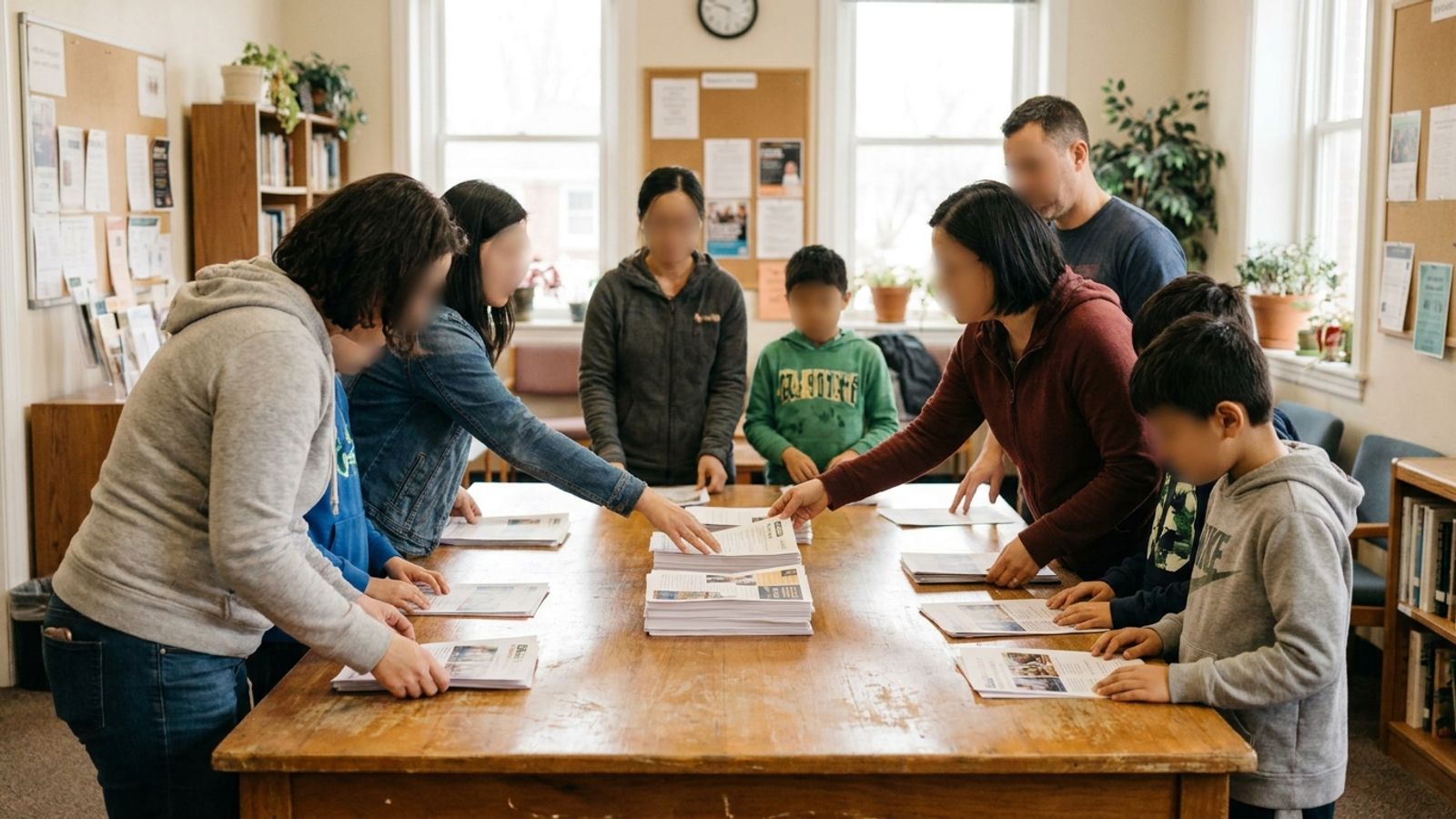
Language access is a community right, but professional translation is expensive. AI translation tools can help your neighborhood association or mutual aid group translate flyers, emails, and meeting notes quickly. The key is using the right tools while protecting community privacy and keeping a human reviewer in the loop.
Mutual aid groups and local associations operate on thin margins. You want every neighbor to feel included, but paying per-word translation rates for a weekly community fridge update simply does not fit the budget. This is where artificial intelligence steps in. Using AI translation for community organizations allows you to share resources across language barriers without exhausting your funding.
Our community workshops are taught by Micah Berkley. We see firsthand how local groups struggle with language access. If you send an English-only flyer about a tenant rights meeting, you are leaving out the people who might need that information the most. AI gives you a first draft, allowing your bilingual volunteers to simply review the text rather than translating from scratch.
How do I translate community flyers and emails with AI?
To translate flyers and emails accurately, skip basic web translators and use conversational AI models like Claude or ChatGPT. Give the AI context about your neighborhood, the specific tone you want, and your target audience to get a natural, welcoming translation.
For years, people pasted text into basic web tools and hoped for the best. The results were often literal, robotic, and occasionally confusing. Today, large language models understand context. In recent industry benchmarks, models like Claude 3.5 Sonnet and GPT-4o have consistently scored at the top tier of translation accuracy, often beating dedicated translation engines on conversational text.
To get the best results, you need to write a good prompt. Do not just paste your text. Tell the AI exactly who the audience is and what tone you want to strike.
Try copying and pasting this prompt: “You are an expert community translator. Translate the following neighborhood flyer from English into Spanish. The audience is working-class families in Chicago. Keep the tone warm, welcoming, and at a 6th-grade reading level. Do not translate the name of the community center. Here is the text:”
After the AI generates the translation, always have a fluent speaker review it. AI is a drafting assistant. A bilingual volunteer can read the AI’s draft and fix awkward phrasing in five minutes, which is far faster than asking them to translate a blank page.
What are the safest AI translation tools for community groups?
The safest AI translation tools for community groups are paid versions of platforms like DeepL Pro or enterprise AI models. Free tools often use your pasted text to train their systems, meaning sensitive information from mutual aid requests could be exposed.
Many organizations rely on DeepL, which is widely considered one of the most accurate translation engines available. However, there is a strict difference between the free and paid versions.
According to DeepL’s privacy policy, the free version may temporarily store your text to improve their algorithms. They explicitly prohibit using the free tier for confidential data. If a neighbor emails your mutual aid group about a domestic violence situation and you paste that email into a free tool, you are violating privacy best practices.
DeepL Pro is entirely different. It deletes your data immediately after translation and does not use your text to train future models. For a local nonprofit handling sensitive intake forms, upgrading to a paid tier is a requirement, not a luxury. You can explore our list of the best AI tools for nonprofits in 2026 to see which platforms offer discounted rates for verified charitable groups.
Can AI translate live community meetings and events?
Yes, AI can translate live community meetings using tools like Wordly or Palabra. These platforms listen to the speaker and instantly provide translated audio or text captions to attendees’ phones, making town halls accessible without hiring a large team of interpreters.
Hosting a multilingual town hall used to require hiring specialized simultaneous interpreters and renting audio headsets. Now, software platforms make live translation accessible for neighborhood budgets.
Tools like Wordly integrate directly with live video feeds and in-person audio systems. As your community leader speaks in English, attendees can scan a QR code on their phones. They will instantly see translated captions or hear translated audio in their preferred language.
Another platform gaining traction is Palabra.ai. Palabra is built specifically for nonprofits and NGOs. It runs smoothly on low-bandwidth connections, which is vital if you are hosting a meeting in a church basement or community park with a weak cellular signal. It also offers two-way translation for one-on-one casework. If you are organizing a neighborhood gathering, you can find more strategies in our guide on using AI to plan local events.
When should I avoid using AI translation?
You should avoid using AI translation for legal documents, immigration paperwork, medical instructions, or high-stakes casework. AI models can invent words or miss critical cultural nuances, which can cause serious harm. Always use certified human translators for these sensitive situations.
AI is excellent for community newsletters, volunteer schedules, and event flyers. It is entirely inappropriate for complex legal or medical situations.
The advocacy group Asian Americans Advancing Justice notes that while AI translations have improved, relying on them for interactions with the criminal legal system or immigration processes can lead to severe unintended consequences. A single mistranslated word on a tenant eviction notice or an asylum resource guide could cost someone their home or legal status.
In these high-stakes scenarios, you must secure funding for certified human translators who possess cultural competency and legal expertise. Treat AI as a tool for everyday community building, not as a replacement for professional legal or medical interpretation.
What should I know about privacy when using AI translation?
You must protect your community’s privacy by never pasting personal identifying information into free AI translation tools. Always remove names, phone numbers, addresses, and specific casework details before translating. If you handle sensitive health resources, rely only on secure paid software.
Your community trusts you with their information. You have a responsibility to handle that data with care. Before you translate an email from a neighbor requesting rent assistance, scrub the text.
Remove the person’s name, their street address, their phone number, and any highly specific details about their situation. Replace them with bracketed placeholders. You can easily paste the translated text into your email client and manually type the correct details back in.
Many states are also tightening requirements around language access. In California, organizations often need to maintain a formal language access plan to comply with grant requirements and civil rights codes. Before an emergency hits your community, sit down with your board and establish clear rules about which AI tools your volunteers are allowed to use and what types of data are strictly off-limits.