AI for Community Organizations and Neighborhood Associations
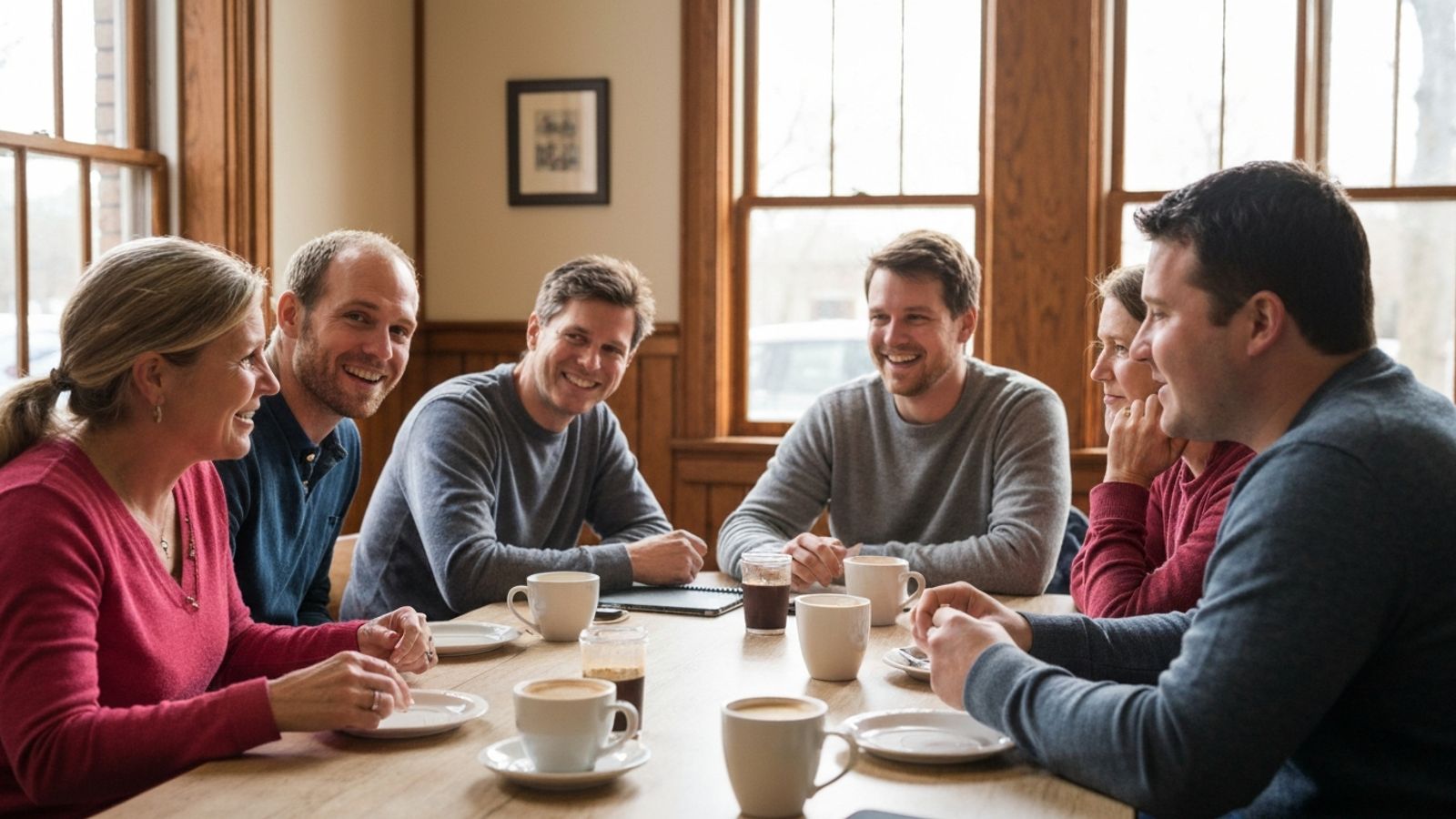
Are you the person who always takes notes at the neighborhood association meeting? Or maybe you’re the volunteer trying to decipher a 50-page city zoning notice for your neighbors? If you run a local civic group, parks committee, or neighborhood watch, you know community work is deeply rewarding. But the paperwork is exhausting.
Most civic organizations are run by volunteers who already juggle full-time jobs and families. You step up because you care about your street, but quickly find yourself buried in administrative tasks. Drafting agendas, writing minutes, applying for grants, and promoting the summer block party can easily become a second job.
Artificial intelligence can actually help. You don’t need a massive budget or a computer science degree. Today’s free and low-cost AI tools can take over the tedious parts of community organizing. They can transcribe two-hour meetings, help you apply for grants, and translate block party flyers so everyone on the street can read them.
We spend a lot of time talking about AI for nonprofits, but small, unincorporated community groups benefit just as much. Here is how your organization can start using AI this week.
As public-interest computing initiatives expand, checking out New York’s Empire AI Beta launch can help you understand how states are building tools specifically for local challenges.
When your group is ready to host a neighborhood gathering, you can also use AI to plan your local events, from building timelines to handling vendor outreach.
How do I use AI for community meeting minutes?
AI meeting assistants like Zoom AI Companion, Otter.ai, or Fathom automatically record, transcribe, and summarize your community meetings. They listen to the conversation and instantly generate organized minutes, action items, and a list of who spoke.
If your group meets virtually, turn on built-in AI summaries. The AI attends as a silent participant and emails you a surprisingly accurate summary of decisions and assigned tasks when the call ends.
For in-person meetings at the library or community center, use a phone app like Otter.ai. Set your phone on the table and hit record. The app captures and transcribes the audio in real time.
This is a massive relief for volunteer secretaries. A 2025 Federal Reserve Bank of St. Louis study found that workers who use generative AI save about two hours in a typical workweek — and community volunteers deserve that same relief. Instead of frantically typing while neighbors debate a stop sign placement, you can actually participate. The AI captures the back-and-forth and distills it into a clean, neutral paragraph for the record.
For formal Homeowner Associations (HOAs) or recognized neighborhood councils, meeting minutes are often a legal requirement. You must document motions, seconds, and final votes accurately. AI tools excel here because they capture the exact phrasing of a motion before summarizing it. Larger city councils adopt specialized software to handle public records, but a free or ten-dollar app is all a neighborhood group needs.
A quick tip on privacy: Always tell your neighbors you are using an AI tool to record and summarize the meeting. Transparency builds trust. If someone shares a sensitive concern, simply pause the recording.
Can AI help our neighborhood association find and write small grants?
Yes. You can use AI chatbots like Claude or ChatGPT to search for local community grants, check eligibility, and draft the first version of your application. AI is especially helpful for small $1,000 to $5,000 neighborhood grants that don’t require a professional grant writer.
Finding funding for a community garden, mural, or playground repair usually takes hours of clicking through confusing foundation websites. AI speeds this up. Ask an AI to help you find funding with a prompt like: “I run a neighborhood association in [City, State]. We need $3,000 to repair our community garden. List five potential grant opportunities from local or national foundations, and tell me the typical deadlines.”
When you find a grant you want to pursue, paste the funder’s requirements and your rough project notes into the AI. Ask it to write a first draft.
Try a prompt like this:
“I am applying for a $5,000 community beautification grant. The funder wants to know our project timeline, community impact, and budget. Here are my messy notes about our plan to plant twenty trees on Main Street. Please turn this into a professional, two-page grant proposal draft.”
Remember, AI is just your first draft assistant. You still need to verify facts, inject your community’s unique voice, and check the math on your budget. But starting with a solid draft cuts the work in half. (If your group is going after larger funding, read our full workflow on AI Grant Writing for Nonprofits).
There is also a growing pool of funding specifically for community groups using technology. For example, the OpenAI Foundation committed $50 million for its 2026 People-First AI Fund, helping trusted organizations use AI for the public good. The McGovern Foundation also issues millions in grants to civic groups applying technology to local problems. Whether you apply for a tech grant or a standard neighborhood improvement fund, AI gives your volunteer team the writing capacity of a fully staffed nonprofit office.
What should I use AI for in resident outreach and translation?
Use AI to instantly translate community flyers into multiple languages and summarize dense city documents into plain-English updates for your neighborhood newsletter.
If your neighborhood has residents who speak Spanish, Vietnamese, or Arabic, you want them at the table. In a 2025 survey of local governments, 94% reported serving a multilingual community, yet only 11% described their public meetings as “very inclusive.” Paying for professional translation for every flyer or update is too expensive for most volunteer groups.
Tools like Canva now feature built-in AI translation. Design your event flyer in English, click a button, and generate perfect copies in a dozen other languages. Print them out and walk the block, knowing every neighbor can read the invitation.
AI is also incredible for volunteer recruitment. Instead of sending one generic email asking for help with the annual bake sale, ask ChatGPT to write three different versions of your appeal: one for retirees with daytime availability, one for high school students needing service hours, and one for busy parents who can only drop off supplies.
Another massive headache for civic groups is city paperwork. When a developer proposes a new building down the street, the city sends a dense legal zoning notice. Instead of reading 40 pages of municipal code, use AI to translate the government jargon into human English.
Upload the PDF to Claude or ChatGPT and use this prompt:
“I am a volunteer for a neighborhood association. Please read this attached city zoning notice. Summarize what it means for local homeowners in three simple bullet points. Avoid legal jargon.”
Take those three bullet points and drop them right into your neighborhood Facebook group or email newsletter. You just saved your neighbors hours of confusion and made local government accessible.
How can we keep our neighborhood data safe when using AI?
Keep data safe by removing personal identifying information before typing it into any AI tool. Never upload unredacted lists of resident emails, phone numbers, or gate codes to a public AI chatbot.
Neighborhood associations handle a surprising amount of sensitive information. You might have a spreadsheet of who paid annual dues, a list of security codes, or notes about a property line dispute between neighbors.
When you use a free AI tool, the system sometimes uses the text you type to train future models. If you paste resident email addresses or phone numbers, you compromise your neighbors’ privacy. Always anonymize your data. If you want the AI to draft a polite but firm email about overdue dues, do not include real names or exact amounts in your prompt. Use placeholders like [Neighbor A] and [Neighbor B].
Treat public AI tools like a digital bulletin board at the local grocery store. If you would not pin a document to that public board, do not paste it into a free AI chatbot.
Community work is about people. It is about checking on the senior next door, organizing the spring cleanup, and making sure everyone has a voice at the local council. AI does not replace any of that. It just handles the typing, so you can get back to the neighborhood.