AI for Mutual Aid: Organizing Logistics and Matching Needs
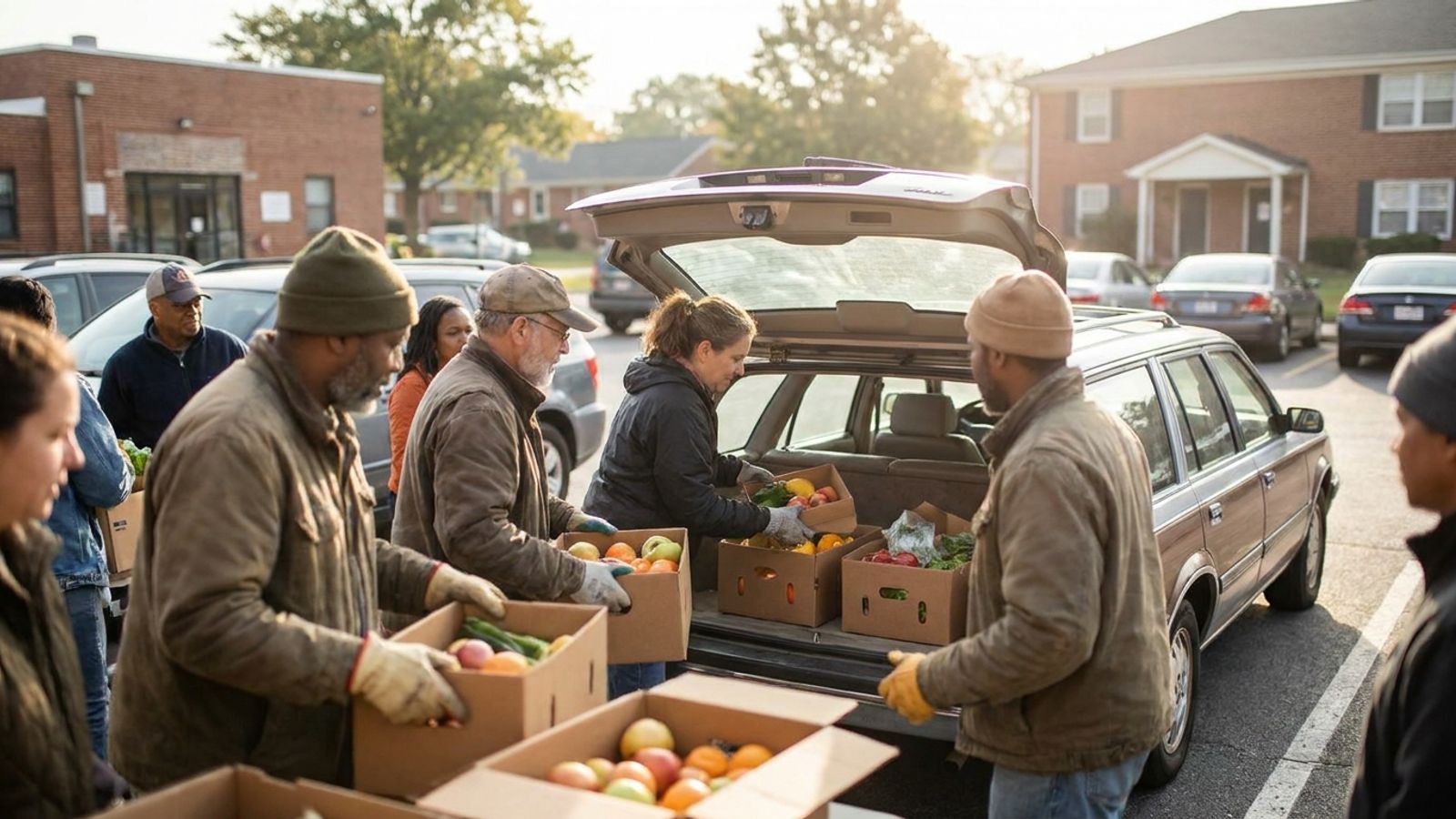
Running a mutual aid network often means spending more time fighting spreadsheets than helping neighbors. AI for mutual aid can automate the exhausting paperwork—sorting intake forms, matching volunteer drivers to grocery requests, and drafting updates—so your community group can focus on actual care. Here is how to use these tools safely.
When your community first organized, it probably started with a group text or a simple paper sign-up sheet. It was just neighbors helping neighbors. But as requests for groceries, emergency rent assistance, or winter coats grow, that simple sign-up sheet inevitably turns into a logistical beast.
Suddenly, you are awake at midnight trying to figure out which volunteer is free on Tuesday morning to drive across town. You are manually texting five different people to see who has a pickup truck. The clerical burden of community care is a primary cause of organizer burnout. You stepped up because you care about your city, not because you wanted a second unpaid job as a data entry clerk.
This is where artificial intelligence actually helps. AI is not going to do the care work. It cannot deliver a hot meal or listen to a neighbor in crisis. But it can do the tedious administrative plumbing that eats your time.
According to a 2026 report by Virtuous, while 92% of mission-driven organizations are trying AI, most are just using it for one-off tasks. To see real relief, you need to build it into your workflow. Generative AI saves workers about two hours in a typical week, a 2025 Federal Reserve Bank of St. Louis study found. For a volunteer coordinator, those two hours mean you can actually attend a community meeting or just get some sleep.
How can AI for mutual aid organize our spreadsheets?
AI organizes mutual aid spreadsheets by automatically categorizing and tagging incoming requests. When a neighbor submits a Google Form, AI tools built into your spreadsheet can instantly label the request type, assess the urgency, and flag specific language needs without human data entry.
If your group uses Google Workspace or Airtable, you already have access to these capabilities. Instead of a volunteer coordinator reading every single intake form and manually typing “Food Request” or “Transportation” into a column, you can set up a simple automation.
For example, when a neighbor types, “I need someone to pick up my prescription from CVS and drop it off, but I only speak Spanish,” an AI text-categorization tool instantly acts on it. It reads the text and tags the row with “Prescription Delivery,” marks the language as “Spanish,” and flags the urgency as “High.”
Airtable AI and Zapier both offer accessible, no-code ways to connect your intake forms to a large language model. You give the AI a set of plain-English rules. You might tell it, “If a request mentions medicine, tag it Medical. If it mentions eviction, tag it Housing.” The AI does the sorting in the background.
This means that when your bilingual volunteers log in to check the board, they instantly see a filtered list of Spanish-language requests ready for action. They do not have to dig through hundreds of rows of unorganized data. The spreadsheet becomes a dynamic dashboard rather than a static filing cabinet.
Can AI match community needs with local resources?
Yes, AI can match community needs with local resources by analyzing volunteer schedules, locations, and skills alongside incoming requests. It suggests the most logical pairings, like assigning a driver who lives three blocks away from a neighbor needing a grocery delivery.
Resource matching is the hardest part of mutual aid logistics. It is a puzzle with constantly moving pieces. Volunteer availability changes by the hour, new emergency requests come in, and the physical distances between neighborhoods complicate your routing.
You can use AI scheduling assistants and specialized routing tools to suggest the best matches. Instead of staring at a map and a spreadsheet for two hours, you can ask your database to propose a delivery route. The AI looks at the zip codes of the requests and the home base of your volunteers, then groups the deliveries logically.
This capability is moving out of corporate supply chains and directly into community hands. Grassroots developers are building localized tools that use AI to connect offers of assistance with specific requests based on proximity and resource compatibility. When you remove the friction of matching, help arrives much faster.
If you are coordinating a large-scale response, like a neighborhood cleanup or a holiday food drive, you can also explore how AI helps plan local events to manage the sudden influx of volunteers. You can set up systems that automatically text a volunteer when a request pops up in their specific zip code.
What are the best ways to automate our intake process?
The best way to automate your intake process is to connect your form to an AI summarizer that drafts a standardized, easy-to-read brief for your volunteers. This turns long, confusing submissions into clear, actionable tasks that can be dispatched immediately.
When people are in distress, they do not always fill out forms perfectly. They might put their address in the “Name” field. They might write a long, emotional paragraph explaining their situation when you just need to know what kind of groceries they require. This is entirely understandable, but it makes dispatching difficult.
You can use an automation tool to catch every new form submission and send it to an AI model. You can then ask the AI to extract the key details into a clean format.
Here is a copyable prompt you can build into your automation tool:
“You are a logistics assistant for a community mutual aid group. Review the following form submission. Extract the requested items, the delivery neighborhood, and any specific dietary restrictions or accessibility needs. Do not include the person’s name or exact address in the summary. Format the output as a bulleted list of 3-4 items.”
The AI processes the messy input and generates a neat summary that gets posted automatically to your private Slack or Discord channel. Your volunteers see exactly what is needed at a glance, and they can claim the task immediately with a simple click or emoji reaction.
Our community workshops are taught by Micah Berkley.
How do I protect neighbor privacy when using AI tools?
You protect neighbor privacy by keeping personally identifiable information entirely out of public AI chatbots. Always scrub names, exact street addresses, phone numbers, and medical details before running data through an AI, or use enterprise tools that do not train on your data.
Mutual aid runs entirely on trust. When vulnerable neighbors ask for help, they are trusting you to protect their dignity and their data. If you paste a raw intake spreadsheet into a public, free-tier AI tool, you are potentially exposing their personal information to the company’s training data.
Never put the following into a public AI prompt:
- Full names of requesters
- Exact street addresses or apartment numbers
- Phone numbers or personal email addresses
- Specific health conditions, financial details, or immigration status
Instead, assign every person a unique ID number in your primary secure database. If you need AI to summarize a situation, draft a response, or translate a message, use the ID number. For example: “Translate this message for Neighbor 402: ‘We have a volunteer who can drop off your groceries at 4 PM on Thursday.’”
If you need to translate materials for your whole neighborhood, see our guide on AI translation for community organizations for more secure workflows.
Alternatively, use paid, enterprise-tier tools like Microsoft Copilot or Google Gemini for Workspace. These versions have strict data privacy agreements stating they will not use your private organizational data to train their public models.
Get back to the work that matters
Community care is inherently human. A machine cannot hold a neighbor’s hand, advocate for a tenant facing eviction, or cook a meal for a new parent. But a machine can manage the clipboard.
By using AI for mutual aid logistics, you are not removing the human element from your work. You are actively protecting it. When you automate the tedious paperwork, you give your organizers their time and energy back. You ensure that requests do not fall through the cracks of a messy spreadsheet, and you make it much easier for new volunteers to step in and help.
Start small. Pick one bottleneck, like categorizing your daily intake forms or drafting your weekly volunteer updates, and automate it. Once your team trusts the new system, you can build from there. The goal is simple: spend less time looking at screens, and more time showing up for each other.